

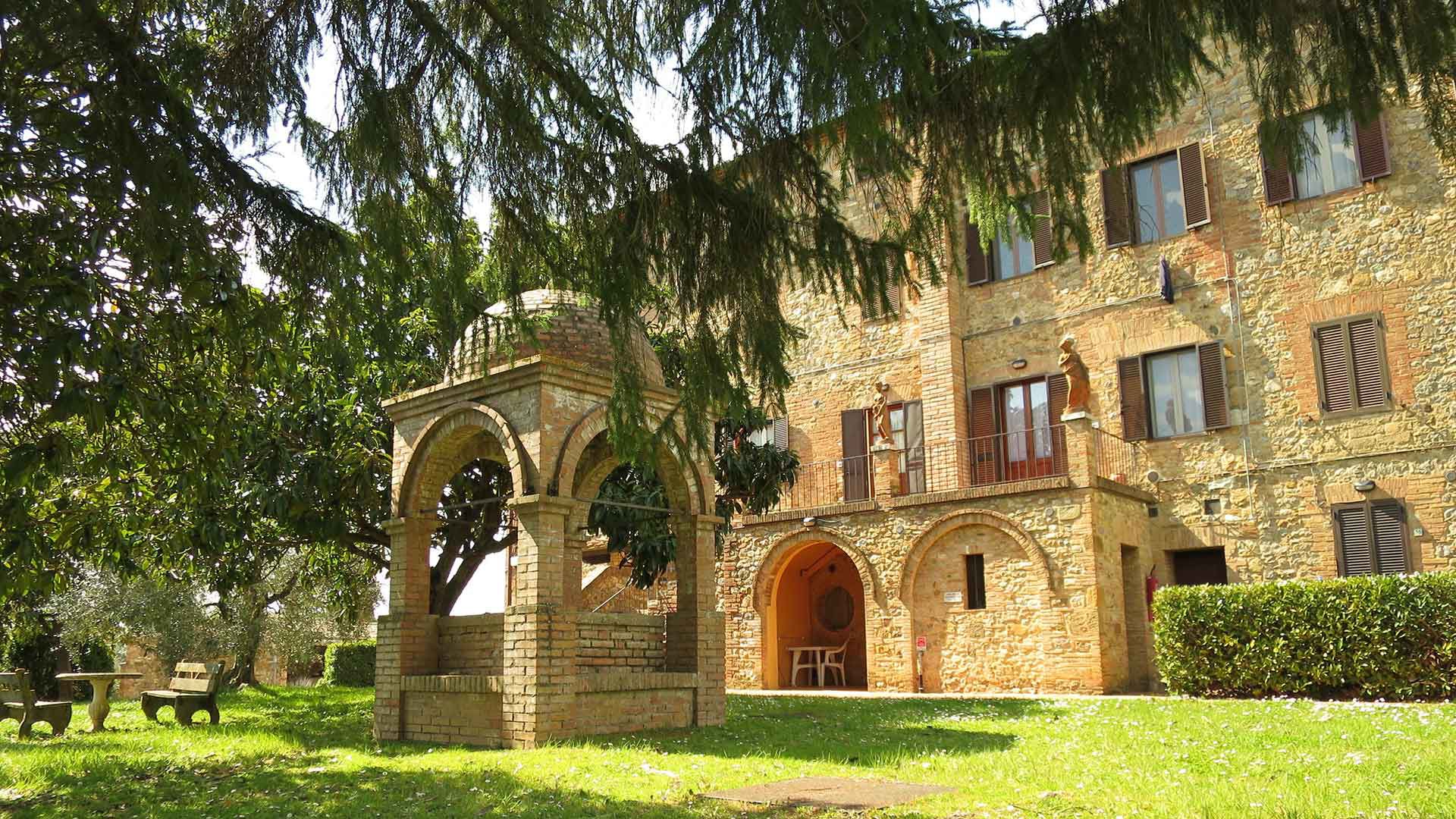
Casa Le Tolfe is a group of rural houses nestled within the unmistakable Tuscan landscape of olive groves, vineyards and woodlands stretching between the Strada delle Tolfe and the Torrente Bozzone.
Between 1950 and 1970, Luigi Castelli — the present-day owner’s grandfather- purchased the Rural Houses, so called CasaLi.
Those rural houses, were occupied by “mezzadria “, sharecropping, farmers, with all their animals, tools and machinery, who divided, with the owner of land, the products and profits of an agricultural company (farm) in half.
After the interlude of the Second World War, a profound crisis hit the Tuscan countryside; by the end of 50ies those homes had suffered a strong phenomenon of abandonment and neglect, due to the need of farmers to find less strenuous and better paid jobs in the neighbouring cities.
According to the architectural historian Italo Moretti, ”those rural houses, having lost their human inhabitants, became like stone sculpturesin a 'rustic garden', on the verge of being considered a stereotypical landscape. They began to take on the charm of ruins, attracting those who would become known as the 'urban counter-exodus' "
Since then, these buildings have been used for a variety of purposes: as first or, more often, second homes, and often as “agriturismo”. Luigi Castelli, in particular, a man of broad vision, converted these abandoned dwellings into an apartment complex, opening up the rural world to anyone who wanted a home in the countryside.
According to the historian Pagano, "the rural house is a working tool...nothing is superfluous, everything was born out of necessity. The logical use of materials, the distribution of volumes, the adaptation to climatic conditions, the naive mimicry of the region's building traditions, the study in overcoming the essential problems of housing with cunning or patience, the calm and crude simplicity with which the essential needs of a fountain, a seat, a canopy are resolved in an embryonic but still sufficient way, transform rural architecture into a book of honest building, full of lessons"
CasaLe Tolfe is undoubtedly one of the eclectic and heterogeneous examples of conversion of rural architecture into modern dwelling in the 70ies.
While CasaLeTolfe Residence was being designed, the nearby San Miniato neighbourhood in Siena was being built in reinforced concrete and in the "modern rationalist" style, driven by the architectural haughtiness of the time.
CasaLeTolfe's Architect Cocito, however, free from today's rigid urban planning and cultural heritage protection , revamped stylistically, the CasaLi with a visionary and imaginative approach. He proposed building features, such as loggias, arches, and gardens, that sometimes are exotic, but not originally belonging to the rural architecture of the area, as can be clearly seen in "Effetti del Buon Governo in Campagna" by the Sienese artist Lorenzetti.
Although Cocito was ambassador of 1970s architectural approaches, he managed to maintain full respect for construction techniques, materials, and local traditions during the space transformation and redevelopment from one function to another.
Nowadays in Tuscany, rural architecture is considered "a constitutive element of the landscape and therefore a common heritage" and therefore strongly protected by cultural, historical and urban planning.